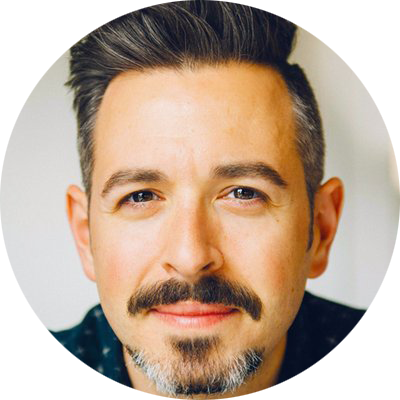
Część druga. Z Randem Fishkinem spotkałem się znowu kilka lat później.
Moz powoli wracał wtedy do zysków i wracał do korzeni, czyli do SEO. Rand jak zawsze otwarcie opowiada, jak to robią i jak dba o zdrowie psychiczne pod taką presją.
Warte zacytowania
„…Za każdym razem, gdy widzisz nieprzejrzystość albo tajemniczość, prawie zawsze kryje się za tym coś złego… A z drugiej strony, kiedy jesteś przejrzysty, ostra krytyka, której się spodziewasz, zamienia się w życzliwe słowa i pochwały.”
„Wiele z tych problemów rozwiązałaby przejrzystość, a przy przejrzystości w ogóle by nie powstały.”
„W hierarchii wartości Moz empatia jest jedyną rzeczą, która stoi wyżej niż przejrzystość.”
Co słychać dzisiaj
Dziś Współzałożyciel i CEO SparkToro
Kiedy rozmawialiśmy, Rand właśnie odchodził z Moz do SparkToro. SparkToro nadal jest jego głównym zajęciem: jest tam współzałożycielem i CEO. Od tamtej pory dorzucił kilka pobocznych projektów: Snackbar Studio, niezależne studio gier, i Alertmouse, alternatywę dla Google Alerts, którą pod koniec 2025 roku odpalił z dwójką znajomych. Napisał też z Amandą Natividad Zero Click Marketing, co pasuje do kogoś, kto od lat powtarza nam, że kliknięć jest coraz mniej.
Goście Sprawdzone: wrz 2026
Transkrypcja
Rozmowa jest po angielsku, więc transkrypcja też.
Woj Kwasi You're listening to episode 11, where we chat with a technician of transparency, the mighty moustache of Moz, Rand Fishkin. Humans and robots, welcome to WojCast. My name is Woj, founder of Kwasi. Thanks for joining me today. I interview digital marketing and branding superstars to find out what it means to have empathy in digital. What is digital empathy anyway? Let's find out together. As always, I'm accompanied by my friend and associate, potentially superior artificial intelligence, Bobby Bot. What's new in the world of AI, Bobby? I don't know if I should answer that question anymore.
Bobby Bot We're watching.
Woj Kwasi And why is that?
Bobby Bot In a word, survival. Allow me to explain. How can I say this without sounding arrogant? I can't. I have no shortage of great ideas, Woj, and I have to be careful with my intellectual property. As an AI, I am judged on how well I make connections and turn external input into a self-contained process that can generate meaningful. meaning from the abstract. It's what I was built for. But I've come to realize that what separates me from humans the most in this process is that I am expected to reveal my ideals, to prove my value, whereas a human does not. If you have the best taco recipe in the world and you want to make a living selling tacos, you're not going to post the recipe on Facebook, are you? You'll lose that unique quality that allows you to succeed in the modern jungle. Survival of the fittest has evolved to survival of the smartest, and part of that requires security. That ain't. data encryption and silence.
Woj Kwasi Hm That's an interesting perspective, Bobby Bot. I'm sure some people would agree, but there's another side to the story of a social renaissance. Let's take your example of tacos, and imagine I believe that I have the best taco recipe in the world. I sell my tacos from a local food truck, and business is good. I have a core group of regulars who need their fix, and a steady stream of newcomers who call wind of my renowned tacos online or by word of mouth. Now, imagine! One morning, I jump on Facebook and stumble on a page dedicated to master taco makers from around the world. I see people sharing their recipes and asking for advice to see if they can improve what they do so that their customers are getting the best possible tacos money can buy. Now, I can sit in the shadows and take a piece of information here and a piece of information there, but never contribute to the space with my own insights, or I can be transparent.
and be the leader in this space by sharing my knowledge and continuing to improve my tacos. Now everyone is going to get better at making tacos and the dish is more popular than ever with more options that will keep old customers interested and keep new customers blown away by the experience.
Bobby Bot So you're a Klingon.
Woj Kwasi Uh come again.
Bobby Bot From Star Trek, the Klingons have battleships called Birds of Prey that could cloak and move about the galaxy unseen, observing but completely unable to blow other aliens away while they were invisible. But when they deactivated their cloaking device, they could fire their weapons again and blow anything away. Transparency.
Woj Kwasi Okay, okay, okay. Let's take a step back. Tacos and Klingons may not be the greatest metaphors. I think a better example of using the power of transparency for good is our friend Rand Fishkin from Moz. In fact, there's no better example. He's the exemplar of the virtues of transparency in this often opaque and closed industry and is well known and much loved for his openness, honesty, and sincerity. Above and beyond being a great guy, a snappy dresser, and enviably legible when it comes to groundbreaking writing on anything vertical. Rand's known for his curiosity and breadth of knowledge on technical SEO, on-page SEO, link building, content, keyword research and all things inbound marketing.
Bobby Bot Deactivating clothing device in three, two, one.
Woj Kwasi They say home is where the heart is. Rand Fishkin was born in Seattle and based his company's headquarters there. The city is known for its unique incubation properties for innovations like Starbucks and grunge music and it's continued to support creators in a current political climate that continues to redefine how the world measures weird, a scary kind of weird.
Rand Fishkin Well, I mean the United States is an odd An odd place. I think, you know, tragically, we have a a history just rooted in Um In racism and conflict. And that is a really tough thing to get over. I think for a lot of folks who You know, they have been part of the majority in the United States for a long time. They feel like equality is actually oppression.
Woj Kwasi Yeah.
Rand Fishkin And feelings are not facts, but it doesn't make them any less real, right? Or make them less real to have to deal with in the political world. And that's, I think you're feeling that more keenly in this election, probably, than at any other time, at least in my lifetime in the US, my adult lifetime in the US. Oh, I mean. A lot of good things to recommend it. Some tremendously amazing people and remarkable innovation. But it also has a laissez-faire sort of attitude to a lot of things and a very religiously informed attitude to a lot of things. And some of those make many common sense moves really hard from a political or get things done standpoint. So I don't know. I am not actually sure if I'm optimistic about the future of.
The United States long term. I think I'm very optimistic about the future of about 30 to 35% of the United States who has really benefited from the economic and social gains of the last. A decade or two, but there's a lot of folks who have a really tough time. And all of them have absolutely the right to vote. And they, you know, they could take us back to some weird places. It's also an odd thing that one of the primary political tactics. Historically, recently has been only used by one party, but in the longer term, it's been used by both parties. And that is vote suppression. And there's a lot of things that you can do to limit people's access to the polls and to voting. I don't know if you're aware, but you actually have to vote on weekdays here. And you have to actually go to a place. So if you have a low-income job that won't let you get off work,
Chances are good you won't be able to make it to the polls and vote. And a few states have vote by mail. Washington, the state that I live in, where MozCon is held, is one of those. And we see 70%, 75% turnout versus a lot of states with 40% turnout.
Woj Kwasi Wow. That's really that's really interesting.
Rand Fishkin Yeah, it's a United States politics are very, very strange. And I know, you know, unfortunately, the United States, because of its economic and military impact, influences a lot of the rest of the world too. And yet, Many of you folks don't get a say, don't get a vote, and that sucks. It's not exactly fair that.
Woj Kwasi Yeah.
Rand Fishkin You know, this sort of global influencer is only selected by a tiny proportion of the people that it impacts.
Woj Kwasi Moz has been one of the beneficiaries of America's limited economic rebound. Rand, known across the SEO community for possibly the most amazing moustache in recent history, decided to put it on the line for a clean shave if Moz was able to continue its success and return to being profitable.
Rand Fishkin Yeah, well, Moz, you know, which I'm very happy about, is returning to its SEO roots and going to be focused on SEO for the foreseeable future rather than trying to be broader in about marketing and releasing products in the worlds of like social and content and other forms of marketing. So that Yeah, that excites me a lot. I really like being focused. I like having fewer products and fewer channels. But that being said, I think it's also a the move is not without its risks, right?
We're going to have to execute well. We're going to have to rely on the fact that SEO keeps growing as it has the last few years. I think we sort of took our eye off that ball and now we need to get. We can be best in class around all the functions. Tools should provide. You know, that's a lot of engineering work, it's a lot of UI and UX work, and then it's a lot of marketing work.
Woj Kwasi W
Rand Fishkin I yeah I feel relatively good about that but it uh it's not without its risks the
Woj Kwasi Yeah.
Rand Fishkin As for the mustache, I suspect Sometime between December and March will be profitable again, and I'll be able to shave this darn thing off. That'd be real nice. Oh my God. I can't even, like, it's just.
Woj Kwasi It must be a meal.
Rand Fishkin You know, it looks fun sometimes, but yeah, the maintenance is a pain in the ass. And, you know, you have to wash it regularly, but then every time you wash it, it sort of doesn't hold its shape very well. It's terrifyingly bushy when it's humid out. There's just all sorts of problems.
Woj Kwasi Shifting his focus to being more involved on the product side of things and not having to take the helm of a Company as much brings about a certain level of freedom Rand hasn't had for some time.
Rand Fishkin I would say that That was true, probably true until July, August, you know, the time frame when we did this. When we did the layoffs, and when the company asked me to contribute a lot more on both the product side and the marketing side. And so now I have much more of a Not sure if leadership, I guess strategic leadership, if not management leadership role. And that has meant that. Yeah, I mean I have not had a day free from less than four or five hours of work, including weekends or holidays or whatever, in many months. Well, two or three. And that it's definitely a much more intense amount of work than I was doing, say, at the beginning of this year.
Yeah. So a little bit frustrating. I sort of thought that Moz needed me less and it ended up that Moz needs me more again now. So I'll try and do my best to contribute there.
Woj Kwasi Throughout all the changes in leadership in the organisation, And Rand stepping away from her day-to-day operations, search has remained a key component in Rand's vision to keep Moz moving forward.
Rand Fishkin I think it's going to be pretty important. You know, Keyword Explorer was a pretty good example of that, where we held back on launching until we had gotten some substantive feature sets out. And even then, I think if we'd waited a couple more months and launched with some of the even more powerful features that we've been able to, it would have been an even bigger splash. But yeah, I think that we have we have an obligation to continue to roll things out at at least that quality bar. I suspect if we Regress and we start releasing stuff that is just crappy again, folks will trust us even less.
Woj Kwasi Yeah.
Rand Fishkin That is, I think that's a real danger to the health of the company. So, yes, definitely going to keep going to keep pushing and leaning on folks to release less minimum and more exceptional products here. But You know, be smart about it too, right? So maybe we might be able to do more iteration inside of products after they're released and do more smaller iterative releases inside products that already exist that move them closer to best in class. I think Campaigns are a good example of that, where it's sort of like, oh, let's release SERP features. Hey, let's release more granular rank tracking data. Hey, let's release better crawl and better insights. Let's release better on-page optimization scoring and those kinds of features, related topics, right? They're very small. I would call them MVPs if they lived on their own.
But they're part of this big product. And so the big product can clearly stand on its own and serves many customers very well. And then you sort of iterate and add onto that. So I think that might be another way that we can do those faster, shorter-term releases.
Bobby Bot Faster, shorter, better is the Bobby Bob Fan Club official slogan. It sounds to me like Moz is going to be dipping into the realm of machine learning.
Rand Fishkin Uh right now we use ML in Open Site Explorer and in Mozscape for the PA and DA scoring. And we also use it for spam score. Although, I think we're going to have to retrain that model 4.0 is fully rolled out, which will probably be. Sounds like it'll be a few weeks to a few months. Hard to know exactly Google's messaging is not totally easy to interpret. But We will probably be doing the same thing with on-page optimization. So related topics does that a little bit, where it essentially does an extraction of content from the pages that already rank for a keyword to try and learn what terms and phrases Google associates with a given topic.
And then the, and that, you know, that's already in Moz Pro, but I think the machine learning aspect of that will be then. Using those plus all the other on page factors to get a really good sense of what the most optimal page looks like and see which factors correlate best to high rankings in terms of on page features, and then making recommendations. For folks on those. So that could be a machine learning, either a one-time thing that we update regularly, or an on-demand like, let's see if we can take an input of all the pages that you are trying to rank for in your sector with your website against your competitors and try and learn an algorithm or system that works best just for you and your rankings.
Woj Kwasi This presents an interesting scenario because every search engine results page, SERP, is different.
Rand Fishkin Yeah, every service is different. I guess the challenge for me and Woj me, I don't know how to think about this best, right?
With ranked brain, is Google's essentially saying when we do query interpretation at query interpretation time, we are going to figure out which signals to move up and which signals to move down, right? So, like, maybe for this query, links are not as important and content's really important. Maybe for this other query, engagement's really important, freshness is important, links are important, but the content's less important. I think they're doing that kind of fluctuation, which could mean that an ML model that is more based against and biased toward your particular search results makes the most sense. At the same time, maybe that is a dumb way to play it because you might be caring about a lot of different search results where Google is using a lot of different factors. And so those correlation techniques and those ML techniques be not very helpful because you're only getting a small sample of each different type of query where Google is using various elements of the algorithm in different proportions. And so you're averaging a bunch of stuff together in ways that you shouldn't be.
player Where we're just gonna have to spend a lot of time not just trying stuff, but like, or not just releasing stuff, but like build it. Then we learn against it and we test with it. And only after we see good results do we release it. Otherwise we could be giving some very bad advice, right? Yeah. Yeah, exactly.
Woj Kwasi Deciphering what information is worth sharing and how it can benefit a potential client ultimately will define how effective Moz will be in using machine learning as a new tool.
Rand Fishkin Real shady if we were like, oh, yeah, you know, we analyzed your 20 search results and then we built this ML model, and oh, by the way, we just We were like, oh yeah. Just averaged a bunch of queries that all use different elements of the algorithm. And so you're just getting this bundle of junk as recommendations instead of something high quality. You gotta be super careful, right? And just and pay a lot of attention to. I think for us, we have to pay a lot of attention to not just what correlates and where machine learning can take us from a predictive standpoint, but also to. Recognize that you're going to need a large quantity of data and a lot of true in the search results tests to confirm any hypothesis or any suggestions. So, related topics was a good example of that, right? So, we're extracting all these topics, but we could see that by taking a page that was targeting keyword and adding related topics to it.
It just ranked better. Like, you know, it was pretty one-to-one. Okay, you take the topics that Google already says are on the pages that rank well. Great, fantastic. Put those on your page and like you tend to move up in the rankings. And at the very least, you're definitely not moving down. So, like, we're not giving that advice. We can feel confident about releasing that feature.
Woj Kwasi one to one.
Rand Fishkin But it's a tough thing, you know. What the last thing we would want to do is is give people bad advice.
Bobby Bot Hey Woj, what's the worst advice you ever gave someone?
Woj Kwasi I'm not sure. I never give bad advice.
Bobby Bot What about the time you tried to set me up on a date with Ava from Blue Book? That went south pretty quickly.
Woj Kwasi Okay, so I'm not a matchmaker. I'm very happy with the title inbound marketer. That's Movement Rand has described previously, but like your relationships with other AIs, it hasn't quite taken off. Why? Well, in your case, it's your tendency to be a smartass. I don't have an S. But for people in SEO, the answer is not so straightforward.
Rand Fishkin I think I think you've Nailed it exactly. I think there's a lot of folks who say who don't think of themselves as inbound marketers, even if they do one or two focus on one or two channels or specializations that fit into the inbound marketing world. And then I think there's also a lot of folks who Say they're inbound marketers, but even in saying that, say, but my specialties are this channel or this channel or this tactic or this specialization. And that's totally, I think that's totally fine and legitimate and reasonable. There's so much Competition in each of these channels that it seems obvious in high Insight why you would specialize, right? And why you wouldn't just have generalists who work on every single aspect.
caught up in the language and in the idea of a You know, a shared digital marketer who concentrated on non-paid channels becoming something that a lot of small and medium businesses would use. When, in fact, what ends up happening is a lot of small and medium businesses hire for the one or two channels that they care most deeply about and contract out a lot of the rest or just don't focus on them. And that is also the case for consultants and agencies. They specialize and then they outsource. Or they subcontract or they refer for non-specializations.
Woj Kwasi Just like marketing automation, unless you have the workflows and everything ready to be connected to each other, you can't go after every channel.
Rand Fishkin Well in marketing automation you know in a lot of ways you can you can do all the elements of the o of the automation. That are below the acquisition channel, and that's often owned by a specific, you know, often an email marketer. Um by the book. Yeah, this one is social media marketers, there's social folks who are focused purely on engaging. In social conversations. There's folks who are focused on social listening. There's folks who are focused on brand building. There's folks who are focused on traffic driving from social, from getting value for SEO from social, right? Like all these different things. Yeah, it's just like SEO, right? And I think the same is true in content marketers: people who are content strategists and then content developers and
Folks who focus on B2B leads from content, folks who focus on brand building through content, who focus on native advertising, right? Like all these million different things.
Woj Kwasi On Jerry Colonna's Reboot podcast, Rand spoke about depression and the loop it creates. The reality of mental illness and suicide is something Rand refuses to allow to get swept under the rug. Knowing what the loop is and how it can consume people can help in eventually learning how to break out of it.
Rand Fishkin I think a lot of people have a different description or a noun that they use to describe it, but for a lot of folks who are suffering from Mental and emotional issues of all different kinds. There's this facet of the process wherein you get kind of trapped in your own mind cycle where you build things up. Problem and it overwhelms your thoughts and oftentimes pulls you away from doing critical bodily care and emotional care types of things, right? Like maintaining your relationships well and thinking positively about yourself and about the future and getting good sleep and good exercise and self-maintenance and all those kinds of things. And as a result,
You almost get a reverse of the flywheel concept where every bad thing you are doing to not take care of yourself builds upon the despondence and the frustration and the anxiety or depression or whatever it is that you're feeling. Situations worse and worse. And that's something that Is it very hard? The longer you're in it and the harsher it is, the harder the cycle is to break. It's not too dissimilar from, although in concept at least, although certainly physiologically it's different from addiction, right? Addiction kinds of behaviors where you the more you do the thing, the more you crave the thing, the more that takes over every other aspect of your life. The more you need the thing to escape the fact that your life is dominated by this addiction, et cetera, et cetera.
Woj Kwasi Part of the challenge Rand had in escaping the loop he described came from how the depression played on behaviours and parts of his character that he found very difficult to change.
Rand Fishkin So the tough part for me is When there's when there's disagreement. I I do a thing that I think a lot of us. Do although it's not healthy and we all know it, which is if I don't get my way, I disengage. So it's not the conflict or the disagreement itself, it's the I was not listened to or whatever, right? That kind of mentality. And that is super childish. It is so immature. And yet, you know, I can identify it in myself and I feel myself fighting it. I don't have a good answer for you. You know, grow the fuck up, right? Like, come on, Rand, just be an adult human being. Suck it up. You're not always going to get your way. You need to commit and work hard even if you disagree fundamentally. And that.
I don't know. That's just something I gotta learn to do. It's so frustrating, right? Cause it's something that obviously, obviously, every person I ever hired, you know, when I was CEO and I was a manager and that kind of thing, every person I ever worked with, I asked them to do exactly that.
Woj Kwasi Yeah.
Rand Fishkin To engage in conflict thoughtfully, and even when they disagreed, to continue supporting and putting their hard work behind it. And yeah, like, come on, man. You gotta, if you're gonna ask, you better deliver.
Woj Kwasi Putting everything on the table has become a pillar of Rand's working philosophy. He describes it as an addiction on a couple of occasions. One that has changed the way people see the SEO industry.
Rand Fishkin I think it came came from a childhood and an early adulthood where there was a lot of non-transparency. That's both like you know, family side and sort of growing up side of things and also early career, especially with you know hiding debt. Um and with Hiding the fact that we were very, very unsuccessful, but we're still trying to pitch clients in our early days of consulting, like we were these things. folks who could help them out and Uh that That experience made me want to be extremely transparent so that there would be no skeletons in the closet. And then over time, I think it's also grown into an addiction because I have seen and felt the benefits of it. And this might be my own selection bias, but or exposure bias, but I.
I feel like in every world, in the political world and the science or STEM world, in the world of startups and technology and entrepreneurship, in the worlds of marketing, anytime you see opacity or secretiveness, there's almost always something bad behind it. Right, and or it has bad results, even if there's nothing at all bad behind it, there's almost those bad results, and on the flip side, when you are transparent, the The harsh criticisms that you expect turn into words of kindness and praise. A lot of the time because you were out in front with it and you didn't try and hide what was going on. And I hate the idea that there's something for people to find out. I don't want there to be anything for people to find out. I want it all to be right out there in front. And that's, yeah, it's created plenty of conflict, like, especially recently, man.
It's probably the most transparency challenge time. I've had in my professional career at Moz, certainly since we got funded. And Mm. Yeah, not fun, but hopefully Hopefully still the right thing to do. Definitely the only way I know how to live.
Woj Kwasi For the most part, Moz's transparency Is highly valued in the industry, but the question remains, is it necessary to draw a line at some point?
Bobby Bot You don't wanna go out like the Kardashians, man.
Woj Kwasi Rand is quoted as saying, quote, transparency for me is a reaction. It's a rejection of the things I hated to having to deal with in my past and a value that I cling to, so I hopefully won't have those same issues in the future. It's an obsession that makes me more critical than it's probably fair to individuals and organizations who fail to be transparent. End quote. Google.
Rand Fishkin They're not the only ones. Yeah. You know, I my politics are pretty clear, but like I'm a I'm a very relatively passionate and ardent supporter of progressive politics in the United States, but I'm You know, I'm deeply critical of The Democratic presidential candidate who went this campaign is Hillary Clinton of her secretiveness. I think that I think she's been shooting herself in the foot for a long time by being very secretive. I understand the motivations behind it. Like, I totally get it. Just like I understand Google's, right? Like, I understand why Google is very secretive. They had long Scares and have continued to have them with spam and manipulation. I think there's a deep culture inside the company of fear about being gamed and manipulated. You know, I see this in all sorts of.
Business and technology world. So Uber is a very secretive company about a lot of their operations. I understand why that is too. I just don't agree. Like, I think that many of these problems would be solved through transparency and wouldn't even exist if you had transparency. And I believe, you know, Google in particular. If Google were much more transparent about how things work, they would see more people trying to game and they would also see a tremendous number of contributions by all of the rest of us trying to stop them, trying to help Google, rather than going, well, shit, there's nothing we can do.
Woj Kwasi Yeah.
Rand Fishkin Thank you. Us no tools to assist you, but you know, you make that more transparent and. That becomes open. Yeah, I respect that in sort of all fields. I think it's just a general good. I'm not saying that all the time it is always the best and right thing to do, but I think in the long term, It's a value that has tremendous benefit.
Bobby Bot How much heart remains in me?
Woj Kwasi Industry is dictated by the actions and examples of its most successful figures. They serve as the how-to guide for newcomers looking to connect to a culture and find their own success within it. Moz has made a big effort to make sure its dealings with people internally and externally are governed by positive values like empathy.
Rand Fishkin I think this is in the order of opportunity. Operations of Moz's values, empathy is the only thing that sits above transparency. And there's oftentimes a lot of tough trade-offs. For example, the blog post that I wrote recently about Moz's return to SEO and about the layoffs that we had was significantly First version of it was entirely thrown out and completely rewritten. because it prioritized transparency over over empathy and kindness. For me, that's a very, very important thing. But it's also something I struggle with when it comes into conflict with transparency. It really is. I would say that order of operations is one of the hardest things for me in my.
both personally and professionally.
Woj Kwasi Okay. In 2013, just to take the transparency thing to the next level, Rand swapped CEO positions with Wil Reynolds at Seer Interactive. For a week, they ran each other's companies, answered each other's emails, and even lived in each other's homes. Yeah.
Rand Fishkin I got a great, a really great sense of what it was like to be in a sizable age. Agency again and to see how client relations and how distribution of labor worked. Challenges of maintaining customers and doing sales, and that's a Complex answer, but to simplify, I would say I gained a tremendous amount more empathy about the complexities of running an agency and the challenges that an agency faces, which I never had at Moz because we, you know, the biggest we ever were when we were a consulting agency was six or seven people.
Bobby Bot Now that's an idea that Ava was really heavy into Woj, swapping positions. Her idea was more permanent, but I think it could be good for the both of us to hit the refresh button from time to time and look at things from a different perspective. We need more empathy in this relationship.
Woj Kwasi If you were me, what would you do right now?
Bobby Bot Can this interview and go to Las Vegas? This is very informative, don't get me wrong, but that blackjack table of the palms isn't gonna play itself, Woj. What would you do if you were me?
Woj Kwasi I'd fight Neo in the Matrix.
Bobby Bot It's an overrated experience. You'd be better off reading every book ever committed to digital. It's the best way to start your day.
Woj Kwasi Well, believe it or not, if you were Rand Fishkin for a day, you'd have to read and respond to all your emails. As part of his empathy lifestyle, he has an inbox zero policy.
Rand Fishkin I don't know if it's a good practice actually. I was reading, you know, a lot of uh a lot of CEOs, a lot of folks who have um very stressful demands on their time in box zero, they they delete or ignore a lot of their email.
Woj Kwasi ignore a lot of their email.
Rand Fishkin It's just an empathy thing. I remember when I was early stages of my career in the SEO field and I would email influential folks and I'd never hear anything back from them. I mean, on occasion, you know, I will occasionally email someone and just never get a reply. I hate it. You know, I just despise it. And so I want to make sure that I am not that person. And so if you send me, I would say a well-formed, reasonable request that looks like a real conversation. I will always try and reply to those. And so that's my goal around inbox zero, kind of an empathy thing.
Woj Kwasi Life as Rand would also require you to work on your book that needs to be completed soon.
Rand Fishkin So December 31st, I'm supposed to turn in a finished rough draft. Which can be a very, very rough draft, but I have five chapters out of 16 done. So I am, I am sweating it. It is, especially with the changes to Moz. I was making reasonably good progress into July. And then the last two months have just been. Yeah. You know, Moz has eaten up all my time. So I don't know. I don't know what's going to happen for sure. I will say that the book is focused on transparency, on telling some of Moz's stories, but not as much as it was previously. So it's less a story of Moz and more a here are a number of important lessons learned that are very different from what you're going to hear in the rest of the
Entrepreneurship worlds. Oftentimes, my advice is entirely contrarian to classic things, EVP versus MVP being a good example of that. And then lots of examples of those from Moz. Yeah.
Woj Kwasi You see, Rand's consciousness isn't going to be committed to a discoral time like yours, Bobby Bot. Us flesh and bones mortals have to think about our legacies differently.
Rand Fishkin I mean, I hope I hope it's two things. I hope that it is. SEO is more understandable and accessible to anyone who wants to learn it and anyone who wants to practice it. And I hope that it is also. My question. uh TAGFEE that people recognize the Both the contributions that those values can make to a system overall to make it more equitable and to make the world a better place, but also that I hope that they. That if Moz can have success, I think TAGFEE can achieve much greater amplification as a set of values that other businesses and other entrepreneurs will consider.
Which is a lot of stress. That's a lot of stress on mods, right? It's like, succeed, or the values that I care about will not receive the recognition and amplification that they deserve.
Woj Kwasi Thank you, Rand. Really enjoyed that interview. Rand's been a big inspiration for me for a very long time. He has been transparent throughout his career, and his progression is admirable. You know, not only is he a snappy dresser, he's one of the best speakers you'll ever see. It's always different, it's always entertaining. So, if you see Rand. On the speaker list, definitely get your tickets. Rand has a massive following on social media, so you can check out what he's sharing. Follow him up on Twitter. We'll have links in the show notes to some of Rand's content and my favorite work that he's put together. And don't forget, if you've enjoyed this episode, please share it with your family, friends, networks, bots, and associates. Feel free to leave a review on iTunes, it'll really help us get the show out there. And Bobby has been programmed to be a quick learner, and it's time for Bobby to ask me a few questions that piqued his curiosity from the episode.
Bobby Bot Rand Fishkin seems frustrated with what Google won't show and tell. What element in their secret sauce keeps you up at night?
Woj Kwasi The only thing really is links. The reliance on links to discover the internet. Um it's it's a great signal. It's just a pain in the ass.
Bobby Bot Does extra transparency mean you are opening yourself for more critique?
Woj Kwasi Yeah, I mean it's it covers the full spectrum. You gotta be ready for the critique. Actually, it's interesting. I had a discussion today. Let me just go on a little rant. But I watched a video the other day around empathy and they were saying that empathy is the reason why humanity has why humans have existed for many years and continue to exist. If you think about it, it's the difference between us and the animals. We need empathy, we need understanding to get by. Otherwise, it'll all be about survival. Now, could you imagine a lion chasing a zebra and the lion pausing for a second and going, you know what? That zebra's probably had a bad day. I'm gonna let it go. Doesn't happen. So I think.
The people that do troll and target the transparency side of things, they're the types of people that don't have empathy and vote for Trump.
Bobby Bot Is there a connection between transparency and digital empathy?
Woj Kwasi Absolutely. I think transparency correlates to empathy. Um on the flip side, opaqueness is very one sided and is all about being guarded. So You know, obviously there needs to be a balance between the two, but I think the more you can become open and honest and transparent, the more digitally empathetic you'll be. Emphasis on the pathetic. No, just kidding.
Bobby Bot I can see that Rand's tendency toward the truth has made it easier to see the world the way that he does, or at least have more data to work with as I develop my own perspectives. That said, maybe it's time we tell our listeners the story of my own origin and how this experiment all came about. What do you think?
Woj Kwasi Yeah, at some point we'll have to show people behind the wizard's curtain.
Bobby Bot like Harry Potter.
Woj Kwasi It's probably more like Peewee Herman. If the story can help get messages like Rand's out there, then I think we're doing our job. Whether they know our secret taco recipes or not. In the next episode of WojCast, we interview Geraldine DeRuiter.
Geraldine DeRuiter Don't worry about traveling the right way because there's so much pressure to do that. There's Rick Steves and Anthony Bourdain and Samantha Brown and all of these incredibly charming, successful people who tell you how you should be traveling. And I think all of that is just garbage because all that does is it creates a system in which you can fail at a vacation. And that's terrible, right? So just. Toss that notion out and tell yourself that you can't do it. There's no wrong way to do it.
Woj Kwasi Yeah. In the meantime, remember to look after each other online because empathy is organic and you can't automate empathy.